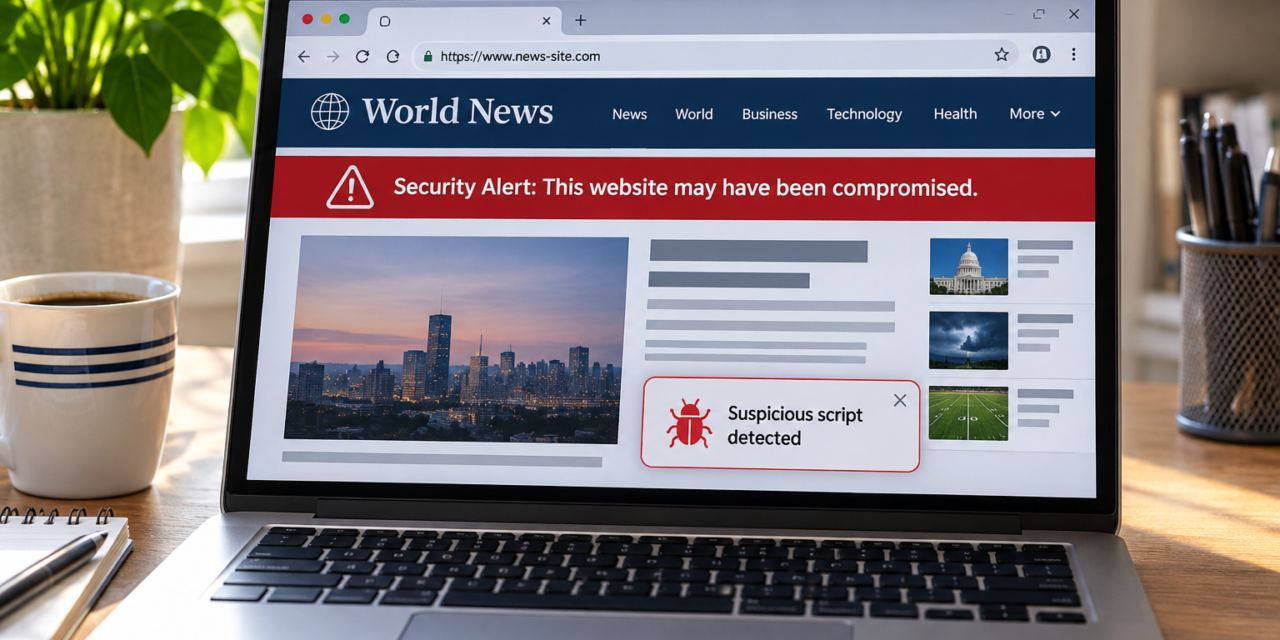
Imagine visiting a familiar website—perhaps a major news site or online store—and having something harmful delivered to your computer. You didn’t click a suspicious email. You didn’t download a file. You simply visited a site you had every reason to trust.
That is the unsettling part of a recent incident involving well-known names including the BBC, CNN, Zoom, Salesforce and IKEA. On November 16, malicious code appeared on websites belonging to at least 178 organizations. The code was delivered through a service those websites used, rather than through a direct break-in to each company’s own website.
So what happened, and should people who visited those sites be worried?
How did this happen?
Many websites rely on outside companies to provide useful features. These might include customer surveys, advertising, chat windows or tools that help a company test different versions of a page. Visitors rarely see these services working in the background.
One such provider, Optimizely, helps companies test and customize their websites. An attacker found a weakness in the way new accounts could be created and used it to place harmful code into some customer projects. The affected websites then unknowingly passed that code along to visitors, much like a trusted delivery service carrying a package without knowing what was inside.
Security researcher Scott Helme at Report URI documented the incident, identifying 188 infected scripts associated with 178 organizations. Reuters also reported on the attack and the companies affected.
What could happen to visitors?
The malicious code was designed to do several things, depending on the website and what a visitor was doing.
For people making cryptocurrency payments, it could replace the wallet address they intended to use with one belonging to the criminals. Someone could carefully copy an address, paste it into a payment, and unknowingly send the money to the wrong place. Researchers confirmed that some cryptocurrency was stolen.
The code also tried to collect payment-card details entered into certain website forms. It could capture some information from the browser, including screenshots and certain cookies. On older iPhones and iPads, it also attempted to deliver additional attack tools. That does not mean every visitor was infected or that every attempt succeeded.
In other words, a person might have visited an affected site and noticed absolutely nothing unusual. The danger was that harmful activity could take place quietly in the background.
Should you be concerned?
Optimizely says it fixed the weakness, removed the malicious code from affected projects and secured the accounts involved. Its November 17 incident report explains what the company found and what it did in response.
If you visited one of the affected sites on November 16, don’t panic. There is no evidence that every visitor was affected. But if you entered payment-card information, keep an eye on your account for unfamiliar charges. If you made a cryptocurrency transfer, check that the destination address in your transaction history is the one you intended to use. iPhone and iPad users should make sure their devices are running the latest available software.
And be alert for follow-up emails claiming to offer help or warn that your account was compromised. Criminals often use news like this to launch another round of phishing. As I’ve discussed in my articles on Phishing-as-a-Service, don’t let an unexpected message rush you into clicking a link or signing in. Go to the service directly instead.
The lesson
We tend to think that if a website is well known, it must be safe. Unfortunately, a website can depend on dozens of outside services, and a problem with just one of them can put visitors at risk.
This doesn’t mean you should stop visiting familiar websites. It does mean that keeping your browser and devices updated, watching your financial accounts and being cautious with unexpected requests are still important—even when you’re visiting a site you trust.